

Our Border, Our Future PDF Print E-mail

Texas Border Coalition White Paper on Border Security

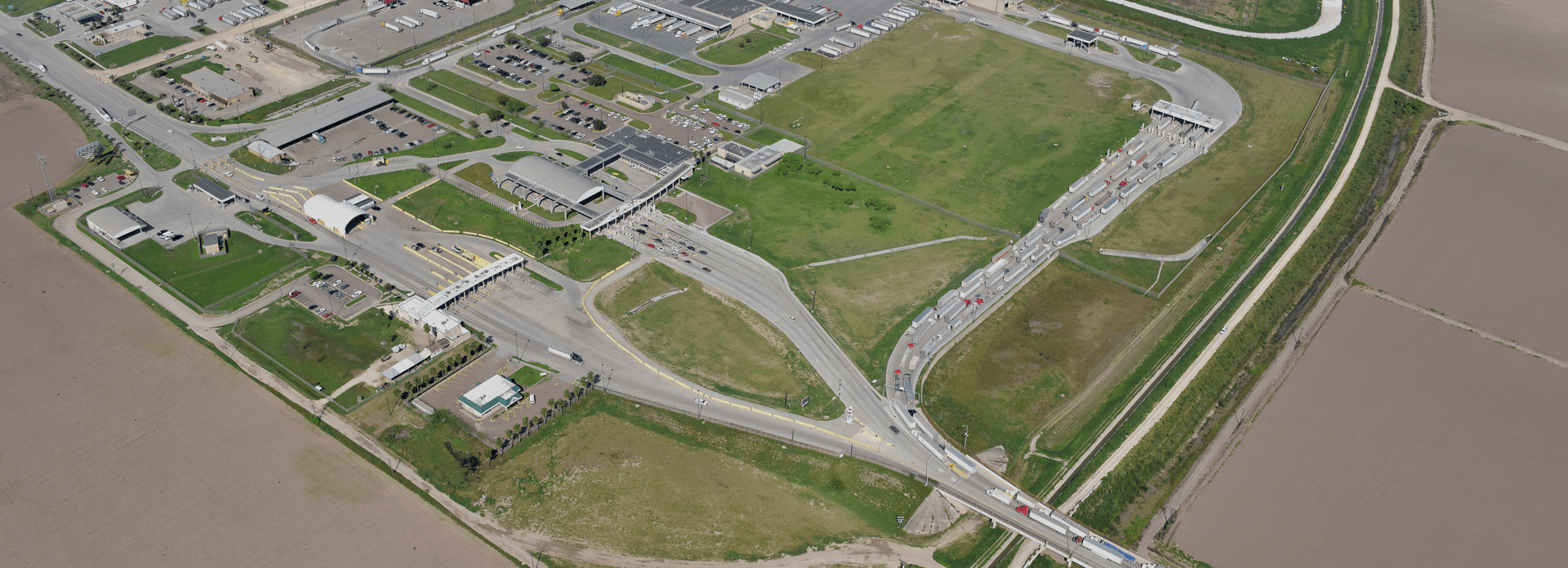
November 13, 2009 - The United States Government divides its effort to enforce the land border with Mexico into two parts: one at the ports of entry and the other between the ports. Along the nearly 2,000-mile border with Mexico, 42 land ports of entry -- located on bridges in Texas and on highways in California, Arizona and New Mexico -- connect the two nations, under the command of U.S. Customs and Border Protection (CBP). The CBP has multiple responsibilities, including facilitation of legal travel across the borders as well as defending against terrorist intrusions. Within CBP, the U.S. Border Patrol has responsibility for policing the vast areas that separate the ports of entry. CBP Officers handle traffic through the ports of entry.

Border Enforcement
Since 1993, the U.S. has engaged in a long-term effort to increase enforcement on the southwest land border with Mexico. It has invested heavily in manpower, technology, transportation and infrastructure to arrange a multi-layered defense against illegal activities, but that investment has lacked balance.

The investment in deterrence has been greatest between the ports of entry; in contrast, the investment at the ports of entry has been relatively small. This imbalance has produced a substantial differential of risk to those who seek to penetrate the border to cause harm to U.S. security. While there is admitted weakness in some of the data, studies detailed in this report indicate that the probability of an illegal crosser being apprehended by law enforcement between the ports of entry is about 70 percent; the probability of an illegal crosser being apprehended attempting to enter the U.S. at the ports of entry is about 30 percent.

This imbalanced deterrence contributes to America’s vulnerability to terrorists and traffic in people and contraband at the ports of entry. This white paper will demonstrate that the land ports of entry on the U.S. southwestern border have become America’s weakest border security link. In response, the Texas Border Coalition recommends a crash program to strengthen the ports of entry, including new investments of $6 billion to bring our infrastructure up to requirements and the training and deployment of 5,000 additional inspectors at the land ports of entry.

Between the Ports of Entry
Since 1993, the number of Border Patrol agents has more than quintupled from
4,000 to a projected total of 22,800 in 20101. The Border Patrol budget has
increased nine fold over the same period from $400 million to $3.5 billion.2
The vastly expanded effort between the ports of entry accelerated in the
aftermath of the September 11, 2001 attacks and the 2003 incorporation of the
Border Patrol into the new Department of Homeland Security. Prior to
September 11, 2001, the Border Patrol’s priority was to prevent the illegal entry
of people and contraband into the U.S. between the ports of entry. After the
September 11 attacks, fighting terrorism was established as one of the agency’s
prime responsibilities.

In addition, Congress funded construction of 670 miles of border fence, now
largely completed at a cost to taxpayers of over $2.4 billion3, and an electronic
detection system that has been only partially deployed at a cost exceeding $1
billion.4

At the Ports of Entry
Despite expanded responsibility and an exponential increase in legitimate trade
and tourism across the southwestern border as a result of the North American
Free Trade Agreement’s ratification in 1993, the enforcement budget for Customs
inspection personnel has seen a paltry boost when compared to the sharp
increase in funding for the Border Patrol. Funding for inspectors increased from
$1.6 billion in 1993 to $2.7 billion in 2010.5 Of that 68 percent increase over 17
years, nearly three-quarters was consumed by rising inflation.

The U.S. has 163 land ports of entry. The General Services Administration (GSA) owns 96.5 and leases 22.5. The National Park Service owns one. CBP owns the remaining 43, of which 39 are located on the northern border. The CBP land ports are relatively low-volume entry points (such as Whitlash, Montana, which saw 791 privately owned vehicles at in fiscal year 2008) while the GSA land ports tend to be larger and have higher traffic volumes (such as at Laredo, Texas, which sees Whitlash’s annual volume every minute).6

There are 42 land ports of entry connecting the U.S. and Mexico that facilitate more than 250 million legal crossings a year, nearly 30,000 per hour. At least two new ports are expected to open in the next 24 months in the Rio Grande Valley. The United States’ two largest export markets are Canada and Mexico. In 2008, cross-border travel at the U.S. land ports of entry and exports with Mexico and Canada totaled more than $360 billion. Three out of four of all legal entries into the U.S. occur at a land port of entry.7

Roles Not Interchangeable
The operational roles of the Border Patrol and CBP inspection officers are not interchangeable. Few recommend attempting to solve the imbalance between the two forces by reassigning Border Patrol agents to the ports of entry. Besides weakening security between the ports, the training and outlook of the two forces does not qualify Border Patrol agents to substitute for CBP officers.

The primary activity of a Border Patrol agent is to Line Watch: to detect, prevent, and apprehend terrorists, undocumented aliens and smugglers. The Border Patrol does not recognize any legitimate activity in crossing the border between the ports of entry.

While CBP officers also defend against terrorist intrusion by identifying high-risk individuals who are attempting to enter into the U.S. at the land ports and stopping criminal activities, they have additional responsibilities that are quite different from the function of Border Patrol agents. CBP officers are responsible for regulating and facilitating legitimate international trade and travel, collecting import duties, and enforcing hundreds of U.S. regulations, including trade, drug and immigration laws. CBP officers must be able to distinguish between legitimate activities and those that violate our laws as they interact with the public in a polite and respectful manner.

Multi-layered Strategy
The multi-layered strategic deterrence built by the Border Patrol between the land ports has increased the difficulty of illegal crossings, although controversy remains about the deterrence associated with individual layers or whether the effort actually deters migrants who are determined to the enter the U.S. to improve the economic state of their families.8

The emphasis on Border Patrol enforcement between the land ports of entry has shifted factors of risk associated with illegal crossings. Interviews with migrants show that the use of “coyotes”9 for illegal crossings has increased markedly, which boosts the probability of successful illegal entry. This demand has also increased the cost of services.10

Weakness of Data
The lack of statistically reliable data related to the number of undocumented aliens residing in or entering the U.S. year-over-year hampers effective analysis related to border security. In addition, in spite of the data’s inherent weakness, Department of Homeland Security (DHS) agencies consider some volumes of related data to be “law enforcement sensitive” and restrict public and academic access to it.

For instance, estimating the flow of undocumented migrants is often an approximation based on apprehension data reported by DHS. The estimated probability of apprehension is often based on factors that include the number of Line Patrol hours of Border Patrol staff and the relative strengths and weaknesses of U.S. and Central American economies. Gordon Hanson, Wayne Cornelius, Valerie Ramey, Scott Borger and the Center for Comparative Immigration Studies at the University of California, San Diego, have devised alternative, more accurate means for estimating inflows and apprehensions on the U.S.-Mexico border.

Their estimates are based, in part, on two components: aggregate apprehensions reported by the Border Patrol, to provide the scale of the movement of migrants, and micro-estimates of the probability of apprehension per attempt to cross the border, based on a datasets from the Mexican Migration Field Research Project and the Mexican Migration Project. These data tend to increase the precision of the estimates.

While the comparison of apprehensions at and between the ports of entry is not as precise as would be optimal, the estimates below are based on the best available existing datasets.

Between the Ports of Entry -- 70 Percent Probability of Apprehension
According to one study, the increased emphasis on enforcement between the ports of entry has boosted the probability of an illegal crosser being apprehended by law enforcement to about 70 percent, although after multiple attempts, most illegal crossers eventually succeed.11 Given the weakness of the data involved, it is important to have comparable data with which to compare this result.

A recent Independent Task Force Report by the Council on Foreign Relations, chaired by former Florida Governor Jeb Bush and former White House Chief of Staff Thomas McLarty III, reported, “Customs and Border Protection officials believe that about two-thirds of those who try to cross illegally are caught, but that is only an educated guess.”12

According to data included in the most recent DHS performance review, the Border Patrol has achieved 75 percent or more of their performance targets for gaining effective control of the U.S. border between the ports of entry classified as high priority for terrorist threat potential or other national security objectives.13 Among the goals is the expansion of the number of miles under effective control of the Border Patrol. As of May 31, 2009, nearly 700 miles along the southwest border was deemed to be under the Border Patrol’s effective control, compared to 241 miles in 2005.14

At the Ports of Entry -- 28 Percent Probability of Apprehension
According to DHS, only 28 percent of “major violators” attempting to enter the U.S. at the ports of entry are detected and apprehended.15 The DHS has set a goal for detecting and apprehending about 29 percent of major illegal activity at ports of entry in 2010. In addition, CBP reports only 50-74 percent success in improving the targeting, screening, and apprehension of high-risk international cargo and travelers to prevent terrorist attacks, while providing processes to facilitate the flow of safe and legitimate trade and travel.16

Strategic Response of the Enemy
U.S. border security strategy does not operate in a vacuum. Major criminal cartels operate from the Mexican side of the Texas-Mexico border and are fueled by the smuggling of drugs and humans into the U.S. and the smuggling of money and firearms into Mexico. The cartels are mature organizations, possessing sophisticated communications, transportation and intelligence systems. They are richly informed about the environment in which they conduct their criminal operations and highly skilled at evaluating risk and executing strategic and tactical operations based on risk judgments. One cartel, the Zeta organization, “looks very much like any global business organization that can quickly, flexibly, and effectively respond to virtually any opportunity, challenge, or changing situation.”17

These criminal organizations are capable of discovering and exploiting weaknesses between the ports of entry, but the Border Patrol has developed tactical mobility and agility to identify and respond. When confronted with a choice of paths by which to conduct their unlawful trade between one that presents a less than 30 percent risk of failure and another that presents an up to 70 percent risk of capture, the cartels will naturally choose the less risky path. In the present environment, the cartels are choosing to conduct their trade across the bridges and highways, through the ports of entry and are rejecting the risk of crossing the Rio Grande and open spaces between the ports of entry.

As ABC News reported in April 2009, “most of the drug shipments smuggled into the U.S. by the Mexican cartels are hidden in trucks that drive across U.S. border checkpoints in plain sight, with little fear of inspection.” The report continued, “Mexican cartels' fleet of 18-wheelers has long since replaced the Caribbean air drops and speed boats used by the Colombian cartels in the 1980's and 1990's.”18

Strategic Choices for the U.S.
Those who mean our nation harm are altering their strategies and tactics to reflect situational changes faster than DHS and Congress can adjust. Because of the U.S. government’s relative lack of nimbleness, DHS and Congress continue to pour national resources into defending between the ports, a path that the enemy has abandoned, while denying resources needed to defend the ports of entry that the enemy has chosen to directly assault.

The choice for U.S. policymakers appears clear: between 1) continuing on strategic path that wastes resources and produces fewer results and 2) changing our strategy to defend against an adroit, responsive enemy (while preparing for the enemy’s next logical move, most likely aimed back to the water and the skies).

As Doris Meissner, former commissioner of the Immigration and Naturalization Service, put the choice: "The more [money] that you pour into the Border Patrol and into enforcement between ports of entry . . . the more pressure there is for people to misuse the system that gets them through the legal ports of entry. It's important to have a balance of resources between both.”19

The scenario envisioned by former Commissioner Meissner has already materialized: A field study conducted in the first quarter of 2009 by the Mexican Migration Field Research and Training Program, based at the University of California-San Diego, found that more than one out of four (28 percent) of unauthorized Mexican migrants interviewed for the study had entered the U.S. on their most recent trip to the border through a legal port of entry, either concealed in vehicles or using false or borrowed documents. This study found that the mean number of apprehensions per trip per migrant when crossing the border through ports of entry (0.36 apprehensions per trip) was only half that for crossings somewhere between the ports of entry (0.73 apprehensions per trip).

The authors noted that “while crossing the border through a POE costs significantly more than crossing in remote areas (people-smugglers can charge $5,000 or more for POE crossings), that mode of entry is much more likely to yield success.”20

Reports from the Government Accountability Office (GAO) have described the situation at the land ports of entry as inadequate to the task of protecting the nation. GAO found that managers at 19 of 21 port offices cited examples of antiterrorism activities not being carried out, new or expanded facilities that were not fully operational, and radiation monitors and other inspection technologies not being fully used because of staff shortages. At seven of the eight major ports GAO visited, officers and managers told of not having sufficient staff, which contributes to morale problems, fatigue, lack of backup support, and safety issues when officers inspect travelers -- “increasing the potential that terrorists, inadmissible travelers, and illicit goods could enter the country.”21

Specific data on land ports of entry staffing, infrastructure and technology needs were not included in the GAO report because the data is considered law enforcement sensitive. Independent reports indicated that the agency needs 5,000 additional personnel and $5 billion in funding for infrastructure and technology in order for the CBP to fulfill its mission.22 In December 2008, CBP land ports of entry modernization program leader Dennis Counihan reported that DHS had identified more than $6 billion dollars in capital improvements to upgrade the existing system, not including any funding for new ports.23

In response, Congress allocated $720 million for land ports, but allocated the vast majority of the money to the small, low-traffic crossings on the U.S.-Canadian border. In addition, the U.S. Senate voted to mandate an additional 300 miles of border fencing between the ports of entry, an item later rejected by a congressional conference committee. That vote marked the first time that Congress has turned down a fence requirement since first approving the Secure Fence Act in 2006.

Texas Border Coalition Recommendations
The Texas Border Coalition (TBC) suggests that the Senate’s approach of
mandating more fencing reflects an ineffective, anachronistic strategy that has
not kept pace with developments at the border or with the risk assessments
made by the criminal cartels. TBC urges Congress and the Obama
Administration to restore balance to border security at and between the ports by
engaging in an emergency program to provide the ports of entry with $6 billion
in funding for infrastructure and technology and to employ 5,000 new inspectors
on America’s front line over the next four years.

It is vital to note that the new inspectors must be assigned to the front lines of the
ports where they are needed, not to supervisory roles. According to GAO, the
number of CBP officers on the front lines of inspection increased from 18,001 in
October 2003 to 18,382 in February 2006, an increase of 381. In contrast, CBP
supervisors rose from 2,262 to 2,731, an increase of 462 managers over the same
period of time. This is a 17 percent increase in CBP managers and only a 2
percent increase in the number of frontline CBP officers.24 Anecdotally, there is
evidence of this pattern over a period of many years. The nation’s security
cannot afford to see an intended increase in front line inspectors siphoned off to
the management level of CBP.

TBC strongly supports these funding allocations, as well as:

  • H.R. 1655 - Putting Our Resources Towards Security Act (PORTS Act)
    authored by U.S. Representative Silvestre Reyes:
    • Authorizes an increase of 5,000 CBP officers at land border
      crossings over five years.
    • Authorizes 350 support personnel and 1,200 agriculture
      specialists to ensure that the agency’s security officers can
      concentrate on their inspection mission rather than specialized
      or administrative duties.
    • Authorizes $5 billion over five years for the GSA to complete
      port infrastructure upgrades necessary to address the overburdened
      infrastructure at our nation’s ports.
  • S. 2767 - The Emergency Port of Entry Personnel and Infrastructure
    Funding Act of 2009 authored by Senator John Cornyn:
    • Redirects a portion of fiscal 2010 appropriations to immediately
      fund 250 additional CBP officers and 25 support personnel for
      deployment on the southern land border.
      24 GAO-06-751R, Information on Immigration Enforcement and Supervisory Promotions in the Department
      of Homeland Security’s Immigration and Customs Enforcement and Customs and Border Protection,
      Washington, DC, June 13, 2006.
    • Authorizes an increase of 5,000 CBP officers and 350 support
      personnel at land border crossings over five years.
    • Provides $5-10,000 retention and recruitment bonuses for CBP
      officers.
    • Appropriates emergency construction funds of $100 million for
      Texas land ports of entry.
    • Authorizes $6 billion over six years for improvements at current
      land ports of entry and construction of new ports on the
      northern and southern border.
  • H.R.1965 - To require the Secretaries of Transportation and Commerce
    to submit to Congress reports on the commercial and passenger
    vehicle traffic at certain points of entry, authored by Representative
    Ciro Rodriguez:
    • Requires the Departments of Commerce and Transportation in
      consultation with CBP to study the scope of border crossing
      times at land ports and to report on the economic impact of
      cross-border delays.

Summary
In a world of asymmetrical threats to U.S. security, and at a time when an Al Qaeda-trained terrorist is charged with conspiracy to use weapons of mass destruction in New York in 2009, the U.S. cannot rely on outmoded strategies and tactics rooted in the past to defend the homeland today. It is vital that Congress and the Obama Administration take immediate action to strengthen our nation’s weakest link in border security: American southwestern land ports of entry must be strengthened with a crash program of $6 billion to bring our infrastructure up to requirements and the hiring of 5,000 additional Customs inspectors.


1 Congressional Budget Justification, Fiscal 2010, U.S. Department of Homeland Security, Washington,
DC, May 7, 2009.
2 Ibid
3 GAO-09-896 Secure Border Initiative: Technology Deployment Delays Persist and the Impact of Border
Fencing Has Not Been Assessed, Washington, DC, September 2009.
4 Ibid
5 Congressional Budget Justification, Fiscal 2010, U.S. Department of Homeland Security, Washington,
DC, May 7, 2009.
6 OIG-10-05, Review of the U.S. Customs and Border Protection Expenditure Plans for the American Recovery and Reinvestment Act of 2009, Depart of Homeland Security Office of the Inspector General,
Washington, DC, October 22, 2009.
7 GAO-08-329T: Despite Progress, Weaknesses in Traveler Inspections Exist at Our Nation's Ports of
Entry: Statement of Richard M. Stana, Director Homeland Security and Justice Issues, Washington, DC,
January 3, 2008.
8 Evaluating U.S. Immigration Control Policy: What Mexican Migrants Can Tell Us Wayne Cornelius,
Director, Center for Comparative Immigration Studies, University of California, San Diego, CA, April 14,
2009.
9 A coyote or pollero is a professional criminal specializing in smuggling humans across the United States
border from Mexico for a fee paid in advance.
10 Evaluating U.S. Immigration Control Policy: What Mexican Migrants Can Tell Us, Wayne Cornelius,
Director, Center for Comparative Immigration Studies, University of California, San Diego, CA, April 14,
2009.
11 Estimates of the Cyclical Inflow of Undocumented Migrants to the United States, Scott Borger, Center
for Comparative Immigration Studies, University of California, San Diego, CA, August, 2009.
12 Council on Foreign Relations, Independent Task Report No. 63, Jeb Bush and Thomas McLarty III,
Chairs, U.S. Immigration Policy, New York, New York, July, 2009.
13 Department of Homeland Security Annual Performance Report for Fiscal Years 2008 – 2010,
Department of Homeland Security Office of the Chief Financial Officer Program Analysis and Evaluation,
Washington, D.C., May 7, 2009.
14 Testimony of Todd Owen, Acting Deputy Assistant Commissioner, Office of Field Operations, U.S.
Customs and Border Protection, Department of Homeland Security before the House Oversight and
Government Reform Committee, Washington, DC, July 9, 2009.
15 A major violation involves serious criminal activity, including possession of narcotics, smuggling of
prohibited products, human smuggling, weapons possession, fraudulent U.S. documents, and other offenses
serious enough to result in arrest.
16 Department of Homeland Security Annual Performance Report for Fiscal Years 2008 – 2010,
Department of Homeland Security Office of the Chief Financial Officer Program Analysis and Evaluation,
Washington, D.C., May 7, 2009.
17 A” New" Dynamic in the Western Hemisphere Security Environment: The Mexican Zetas and Other
Private Armies, Dr. Max G. Manwaring. U.S. Army War College Strategic Studies Institute, Carlisle, PA,
September 25, 2009.
18 Cocaine Highways: Post-NAFTA, Most Drugs Cross U.S. Borders in Trucks, Mexican Cartels Using
Huge Fleet of 18-Wheelers, Only 5% Inspected at Border Crossing, ABC News, Richard Esposito, Asa
Eslocker and Brian Ross, April 16, 2009.
19 Border Security Falls Short In Audit, GAO Criticizes Staffing, Training By Spencer S. Hsu, Washington
Post, November 6, 2007.
20 Wayne A. Cornelius, David Fitzgerald, Pedro Lewin-Fischer, and Leah Muse-Orlinoff, eds., Mexican
Migration and the U.S. Economic Crisis: A Transnational Perspective (Boulder, CO: Lynne Rienner
Publishers, 2009), pp. 61-62.
21 GAO-08-329T: Despite Progress, Weaknesses in Traveler Inspections Exist at Our Nation's Ports of
Entry: Statement of Richard M. Stana, Director Homeland Security and Justice Issues, Washington, DC,
January 3, 2008.
22 Border Security Falls Short In Audit, GAO Criticizes Staffing, Training By Spencer S. Hsu, Washington
Post, November 6, 2007.
23 U.S.-Mexico Joint Working Committee (JWC) Meeting Minutes, Tijuana, Baja California, Mexico
December 2-3, 2008.

About the Texas Border Coalition
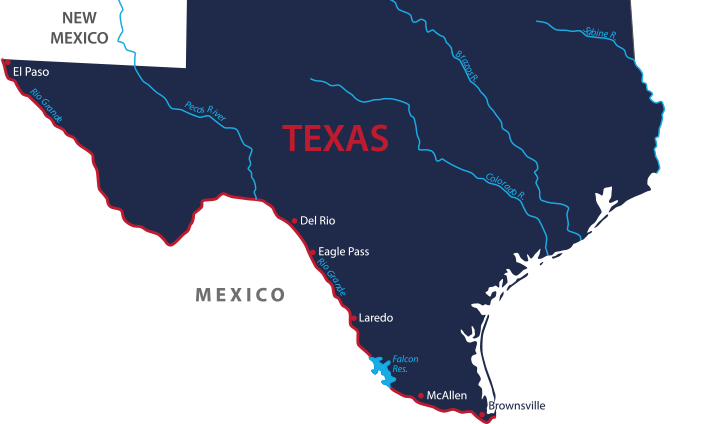
The Texas Border Coalition (TBC) is a collective voice of border mayors, county judges, economic development commissions focused on issues that affect more than 2.1 million people along the Texas-Mexico border region and economically disadvantaged counties from El Paso to Brownsville.  TBC is working closely with the state and federal government to educate, advocate, and secure funding for transportation, immigration and ports of entry, workforce and education and health care. For more information, visit the coalition Web site at www.texasbordercoaltion.org.


Member Section
Username

Password

Remember me
Password Reminder
No account yet? Create one
Upcoming Events
No Upcoming Events Now
<<        >>
S M T W T F S
27 1
2
3
4
5
6
7
8
9
10
11
12
13
14
15
16
17
18
19
20
21
22
23
24
25
26
27
28
29
30
31
1 2 3


Join Our Mailing List
SignUp
Premiere Sponsors: The following organizations support the work of Texas Border Coalition throughout the year.


All rights reserved. � 2007 Texas Border Coalition. By using this Web site, you accept our Terms of Use and Privacy Policy agreements